
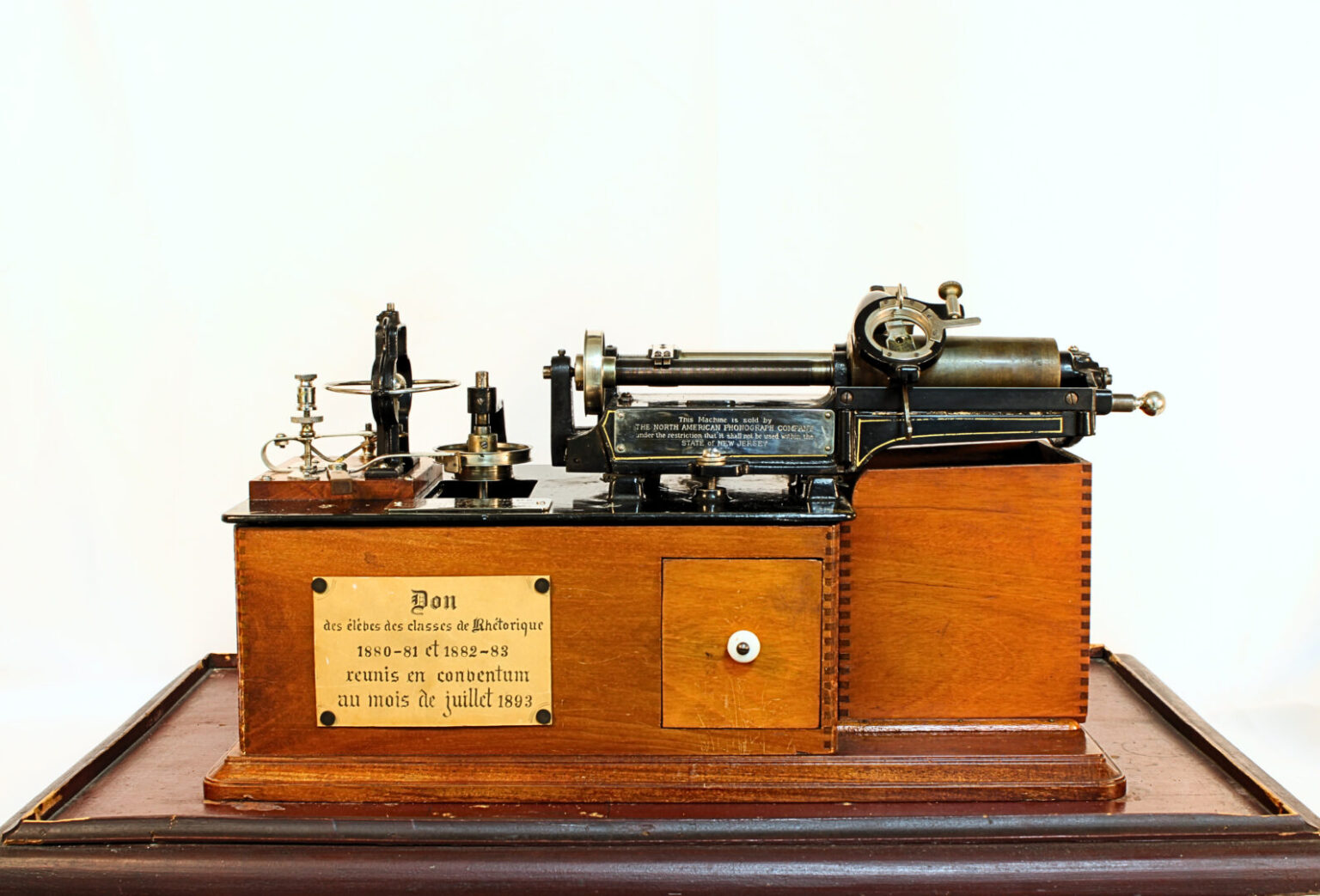
The very first phonograph is attributed to American inventor Thomas Alva Edison (1847-1931); it was developed in late 1877. The first recordings of voices, music, or any type of sound were etched onto tin cylinders, then wax.
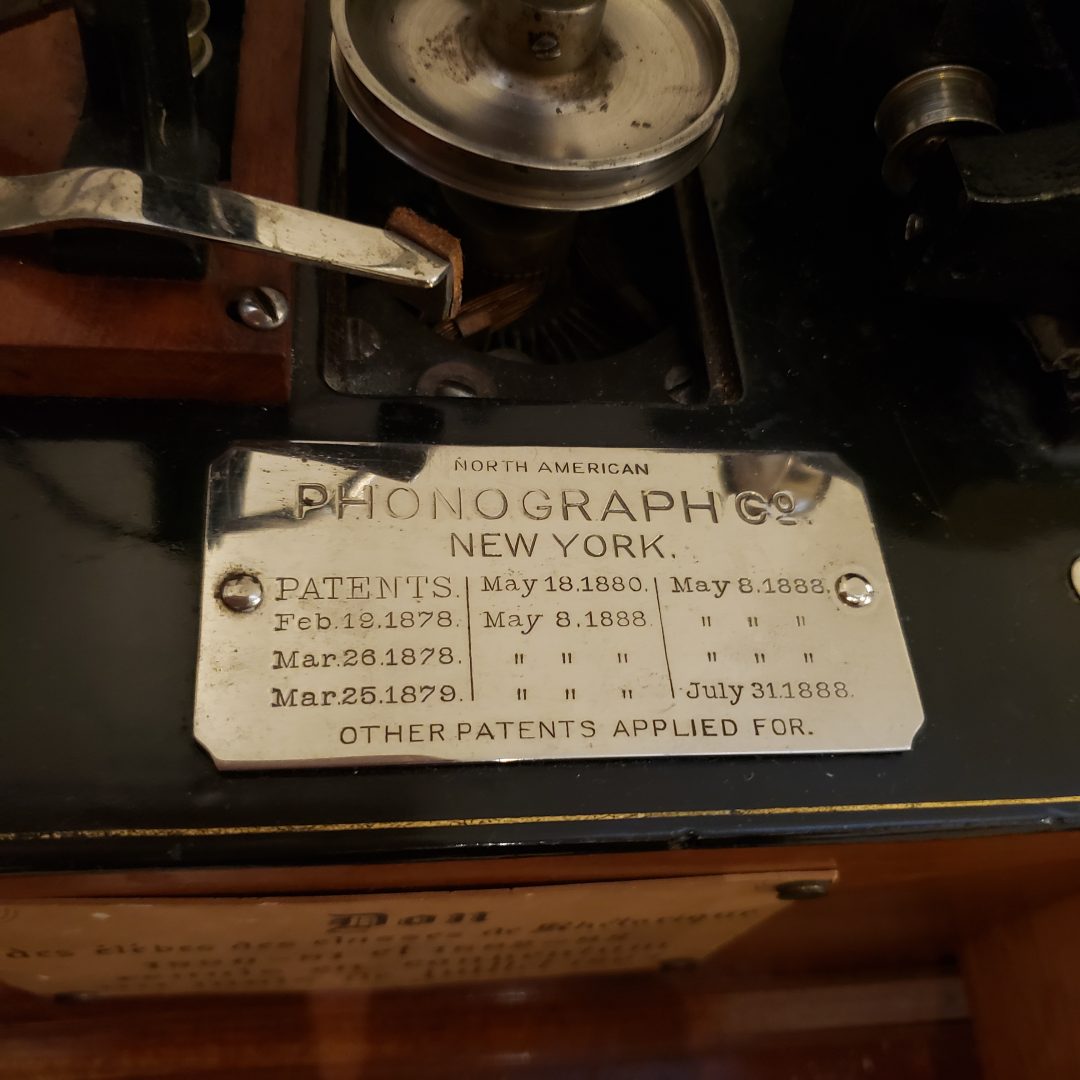
This cylinder phonograph, to which a listening cone had to be added, was manufactured between July 31, 1888, and July 1893 by the North American Phonograph Company in New York.
A note appears on a metal plate attached to this device. This note specifically mentions that the device cannot be used in New Jersey due to restrictions related to patents or other trade agreements. Unsurprisingly, Thomas A. Edison’s laboratories had been located in West Orange, New Jersey since 1887.
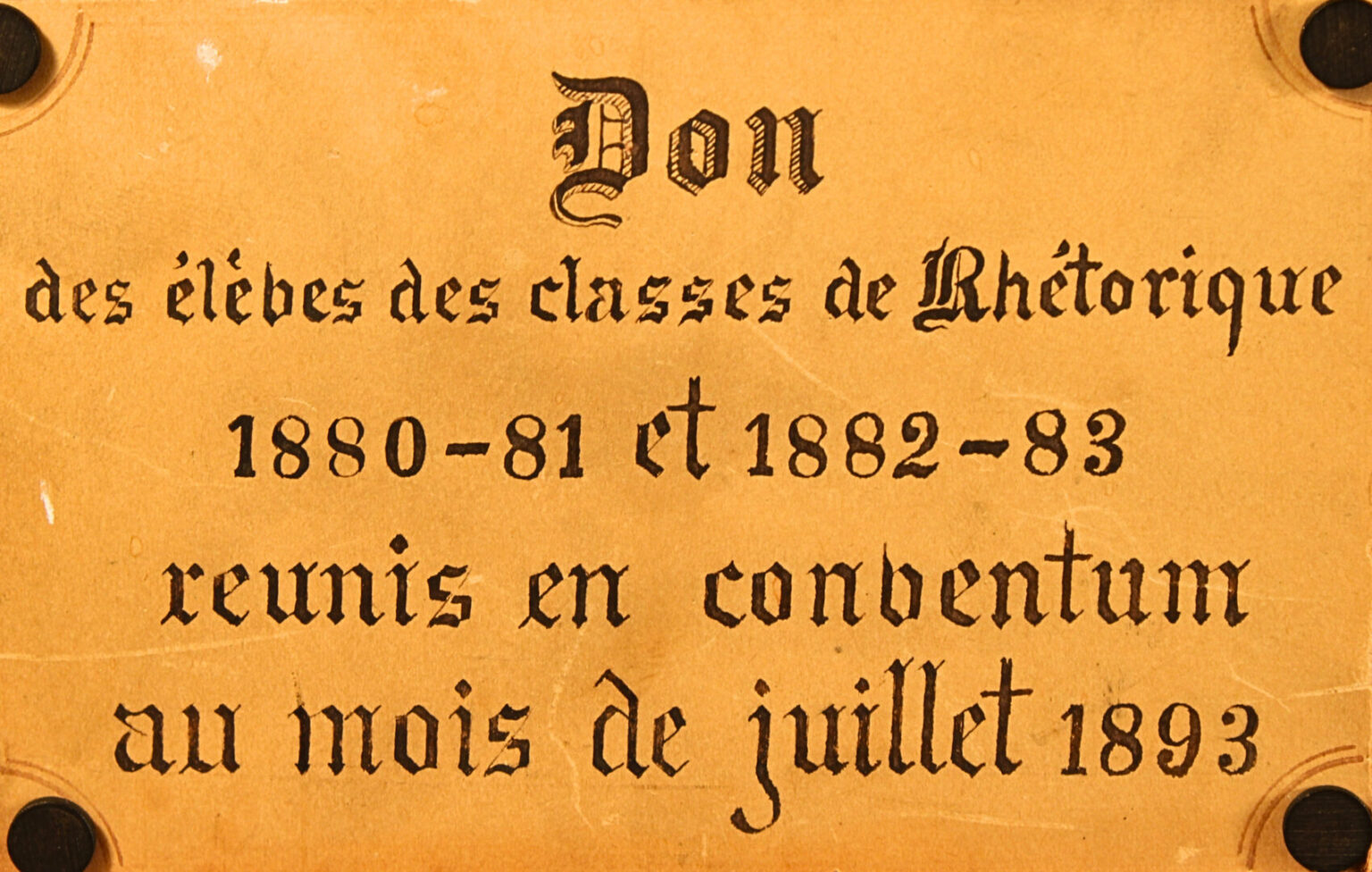
This phonograph was offered to the authorities from the Séminaire Saint-Joseph in Trois-Rivières by the graduates of the 1880-1881 and 1882-1883 years when they reunited at the seminary for their conventum in July 1893.
Much like a turntable—also called a record player—is used these days to play a vinyl record, at the end of the 19th century, the wealthiest people had the hobby of getting a phonograph to spin a wax cylinder and listen to their favourite tunes.
According to W. E. Elliott in an article published in the Sherbrooke Daily Record on November 1, 1927, on page 8, Thomas A. Edison’s father, Samuel (1804-1896), was born in Digby, Nova Scotia, Canada. The latter married Nancy Elliott, a teacher. The family left Canada to settle in the United States in the late 1830s.
Musée Pierre-Boucher Collection
1978 151 M.2-1

Some piece offers
a narration of the descriptive
texts;
The work description
is set at a fixed height.
You can scroll down
at any time to
see more.
Some pieces have more
than one image. Click on the arrows
to scroll through them.
Navigate between works
using the "previous"
and "next" buttons
You can also consult
the pieces contained
in a room in a grid.
